
As if modern dating wasn’t complicated enough already, matching with someone over dating platforms is increasingly turning into a lesson in micro-fraud. Added to the mix of ghosting, bad conversations, or someone looking entirely different from their on-app profile is financial fraud. The playbook is simple and surprisingly effective:
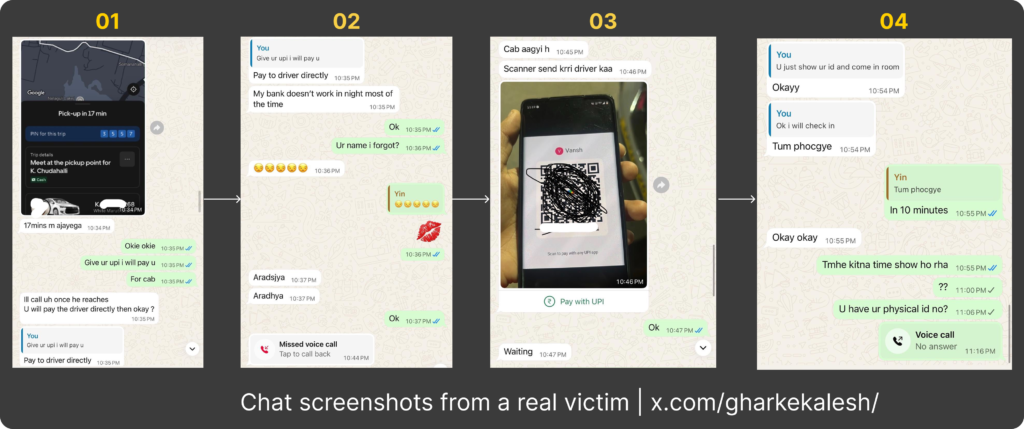
- The Setup & The Hook: after matching, the scammer initiates plans to meet. These sound fairly simple, straightforward and most of all, regular. They check if you would like to move off the dating platform and to a direct messaging application. Just as the plan gets finalised, comes the catch: a quick request for you to cover their cab fare. This is typically timed right before the scammer is about to leave their location to meet you for the date.
- Building the Illusion: to build trust, they send over a convincing screenshot showing the driver’s details, booking status, and price tag. They might claim their banking app isn’t working late at night amongst other logistical issues, asking you to pay the driver directly via UPI. In some cases, scammers present this as a necessary pre-condition to move forward with the date.
- The Cold Reality: as soon as the money is transferred, the match blocks you and disappears entirely. The screenshot shared by them was entirely fabricated. There was no driver, and no trip was ever booked.
Why Scammers Get Away With It
Individually, these losses, often under ₹2,000, might seem too small to bother reporting. Between the minor hit to one’s wallet and the awkwardness of explaining the situation, most victims just absorb the loss and move on. Scammers rely on this exact combination of shame and low financial stakes to operate at scale without raising alarm bells. In 2021, the Indian Cybercrime Coordination Centre recognised this format of fraud, categorising it as “romance fraud” and linked its rise to the COVID-19 pandemic. It subsequently issued an advisory for citizens.
Simple Rules to Stay Safe
- Never Transfer Funds Before Meeting: Treat any financial request from someone you haven’t met face-to-face, regardless of the amount or emergency, as a major red flag.
- Reject Third-Party Account Requests: Refuse requests to pay a “driver,” “friend,” or unverified UPI/bank account provided by your match.
- Control the Transaction: If offering to pay for a ride, book it directly through your own Uber or any other trusted ride-hailing app and share the official live-tracking link instead of sending money.
Things to Watch Out For
- Rushing Off-App: exercise caution if a match immediately insists on moving to WhatsApp or private messaging, especially right before asking for financial help.
- Reliance on Screenshots: never trust static images showing driver details, fares, or bank errors as these are effortlessly edited with basic graphics software.
- Manufactured Urgency: scammers often exploit politeness or social pressure (e.g., “I don’t trust driving late without paying in advance”) to force a quick payment.
What to Do If You Get Scammed
- Cut Contact: stop messaging and do not attempt to negotiate.
- Report the Profile: report the account on the dating app immediately for financial fraud.
- Notify Authorities & Banks: report the incident on your national cybercrime portal (e.g., India’s cybercrime.gov.in or call 1930). If money was sent, contact your bank or UPI provider immediately to dispute or freeze the transaction.
You can report any cybercrime incident to the National Cybercrime Helpline by dialling 1930, or register your complaint at cybercrime.gov.in.
Cover image created with generative AI.