
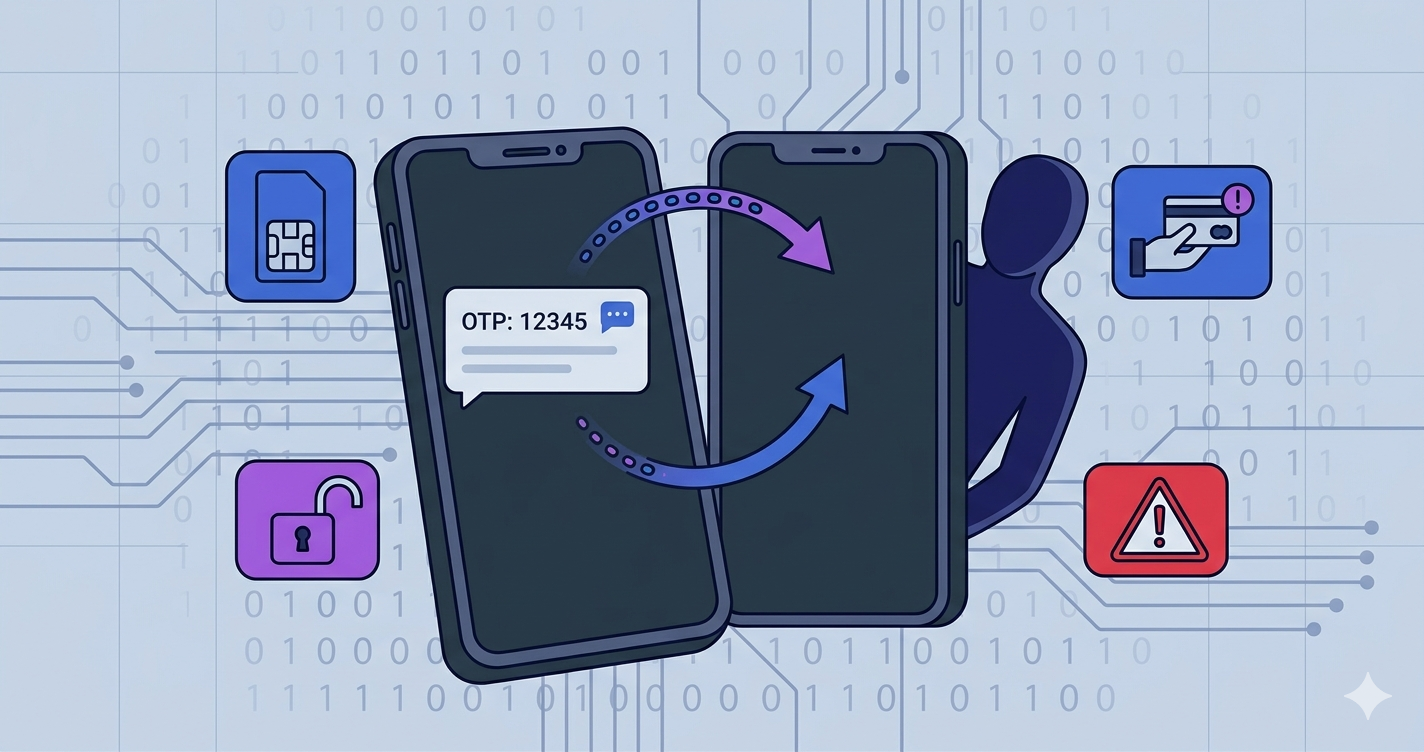
Your phone number is not just a contact detail. It is tied to your bank account, your Aadhaar verification, your email recovery, and it can be taken from you without anyone touching your phone.
SIM swapping is when a scammer gets a new sim card issued in your name, usually by convincing your telecom provider that they are you. Once that happens, your sim goes dead and theirs comes alive – with your number attached. Every OTP your bank sends, every authentication, and all your sensitive messages goes to them.
Most victims find out when their phone loses signal and they cannot figure out why. By then, the money is usually gone.
How it works
- The groundwork
Before approaching your telecom provider, scammers collect whatever they can find about you: your name, date of birth, Aadhaar number, account details – from phishing emails, data leaks, or purchased databases.
- Convincing your telecom provider
Scammers use stolen details to pose as you at a store or over a customer care call, get a replacement sim issued, and take over your number.
- Convincing you directly
Sometimes the scammer contacts you, posing as a telecom executive. They say your sim needs an upgrade or verification and ask for your sim card number or account details. Once they have it, they carry out the swap themselves.
- SIM jacking through malware
If you click on a suspicious link, malware can get into your phone and pull out sim-related information quietly. In some cases, this lets an attacker take over your number without ever calling your telecom provider.
- Financial fraud and identity theft
Once they have your number, the OTPs flow to them. They can transfer money, reset passwords, and take over accounts. Most victims only realise what has happened after their phone goes quiet and they check their bank balance.
Warning signs
- Your phone loses signal in an area where you usually have coverage
- Calls and messages stop coming in without explanation
- You get a message from your telecom provider about a sim swap or eSIM upgrade you did not request
- You are locked out of your bank or email without having changed your password
- People in your contacts are getting strange messages from your number
Any of these should prompt an immediate call to your telecom provider to freeze the sim.
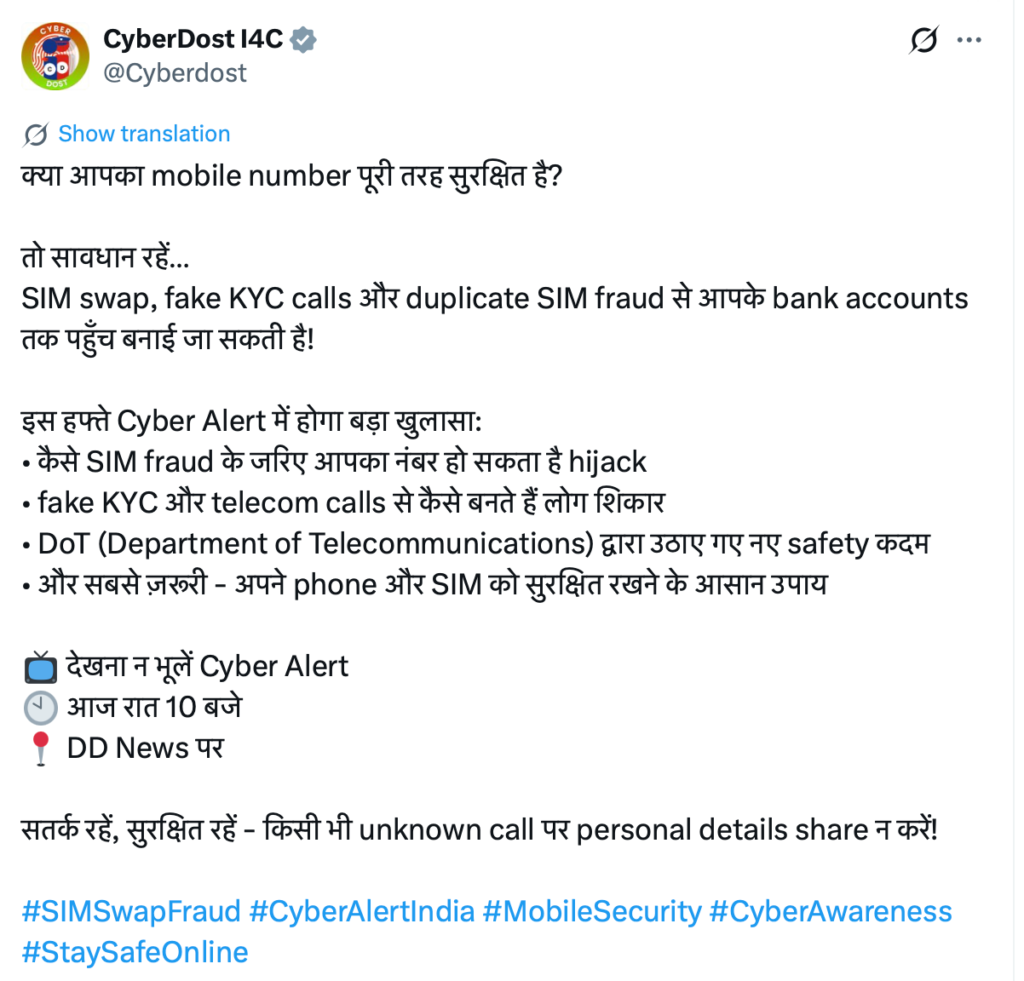
What to do if it happens to you
In 2025, the Bombay High Court upheld an RBI framework in a case where ₹1.24 crore was drained from a Mumbai company’s accounts through SIM swap fraud. The court found that because the exploit was a third-party failure, the bank had to restore the full amount.
So if your account is emptied through a swap you did not authorise, push back on your bank. To keep that option open:
- Report the fraud to your bank in writing as soon as you find out, ideally within three working days
- Get a written acknowledgment of your complaint from the bank
- If they refuse to refund, take it to the RBI Banking Ombudsman
- File a police complaint and send a copy to the bank
How to protect yourself
- If your telecom provider sends you a notification about a sim swap or eSIM upgrade you did not request, call them straight away to block it. Providers send these alerts for a reason.
- Do not share your ICCID or IMSI number with anyone – these are printed on your sim card. Your provider does not need them from you; anyone asking for them is a red flag.
- Avoid managing your mobile account over public Wi-Fi. Use mobile data or a trusted network when accessing telecom or banking portals.
- Ask your bank if they offer sim binding, which ties your account authentication to your specific registered sim. Not all banks have this, but it is worth asking.
You can report any cybercrime incident to the National Cybercrime Helpline by dialling 1930, or register your complaint online at cybercrime.gov.in.