
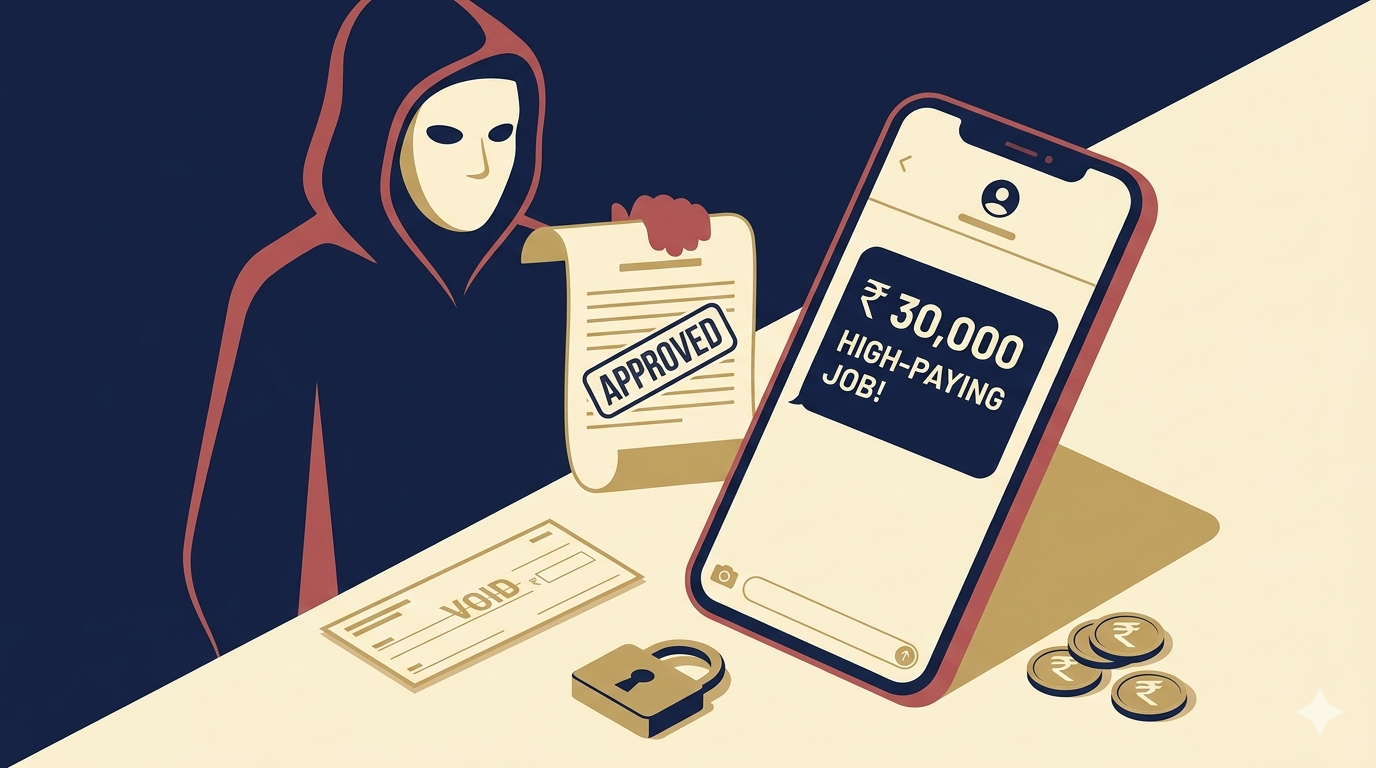
Job scams are not new, but the people running them have got better at hiding them. They used to look obviously fraudulent, often poorly formatted emails with vague job titles and suspicious payment requests. Now, they arrive in your inbox as a polished message from what may appear to be a legitimate recruitment firm, a well-known company, or someone from your network.
How it works
The pattern is almost always the same, even if the surface details differ. A scammer creates an attractive job posting on a legitimate job site, social media platform, or messaging app. The listing promises high pay, easy work, or quick hiring. When you respond, the process moves fast. You are told you have been selected, often without a proper interview or any real screening.
Once they have your attention, requests follow: fees for training, registration, work materials, or document processing. They may send fake offer letters or contracts, or direct you to a website that looks legitimate but is not. After collecting payment or your personal details, they disappear.
Our blog covers the most common types of fake job scams targeting job-seekers in India, and what the warning signs look like in practice.
Types of Job Offer Scams
- Work-from-Home Scams
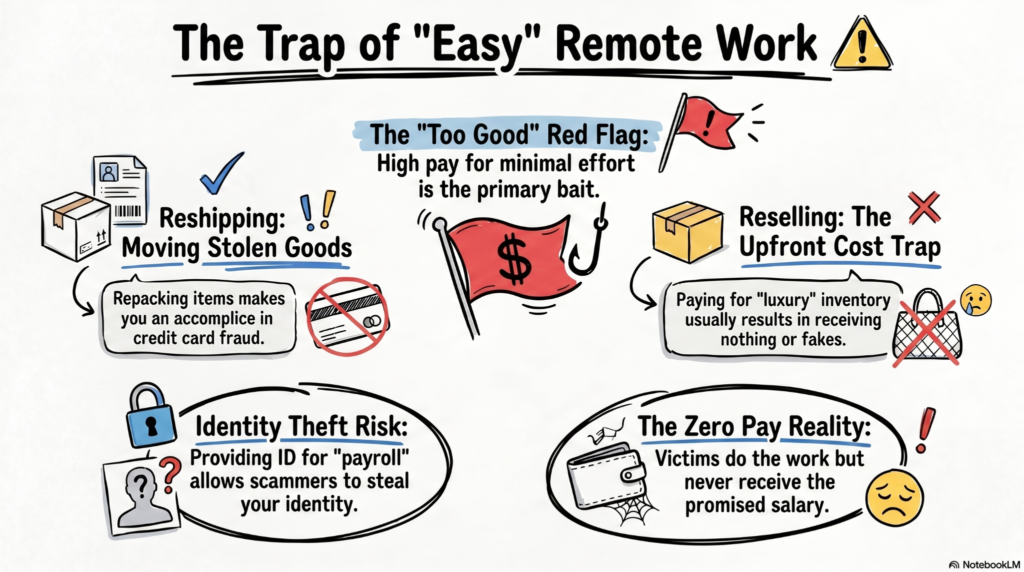
These target people looking for flexible income. The pitch is simple: earn several lakhs a month from home, with minimal time and effort. Two versions show up repeatedly:
- Reshipping scams: victims are hired as quality control managers or logistics coordinators. The actual job involves receiving packages, repacking them, and sending them to other addresses. The goods have usually been bought with stolen credit cards. Salaries are never paid. If you give any identity documents for payroll, you may also face identity theft, and you could unknowingly become part of a criminal chain.
- Reselling merchandise scams: you are asked to buy luxury goods upfront to resell at a profit. The items either never arrive or turn out to be worthless. The money you spent is gone.
- Personal Assistant and Caregiver Scams
Scammers post fake ads for nannies, caregivers, and virtual assistants on job sites. The message may appear to come from someone in your community, or even from an organisation you recognise, like your college or university.
If you apply, the person who hires you will send a cheque, ask you to deposit it, keep a portion as payment, and transfer the rest to someone else. This is a scam. The cheque is fake and it will bounce. Your bank will reverse the deposit and require you to repay the full amount. The scammer keeps whatever real money you transferred.
- Job Placement Service Scams
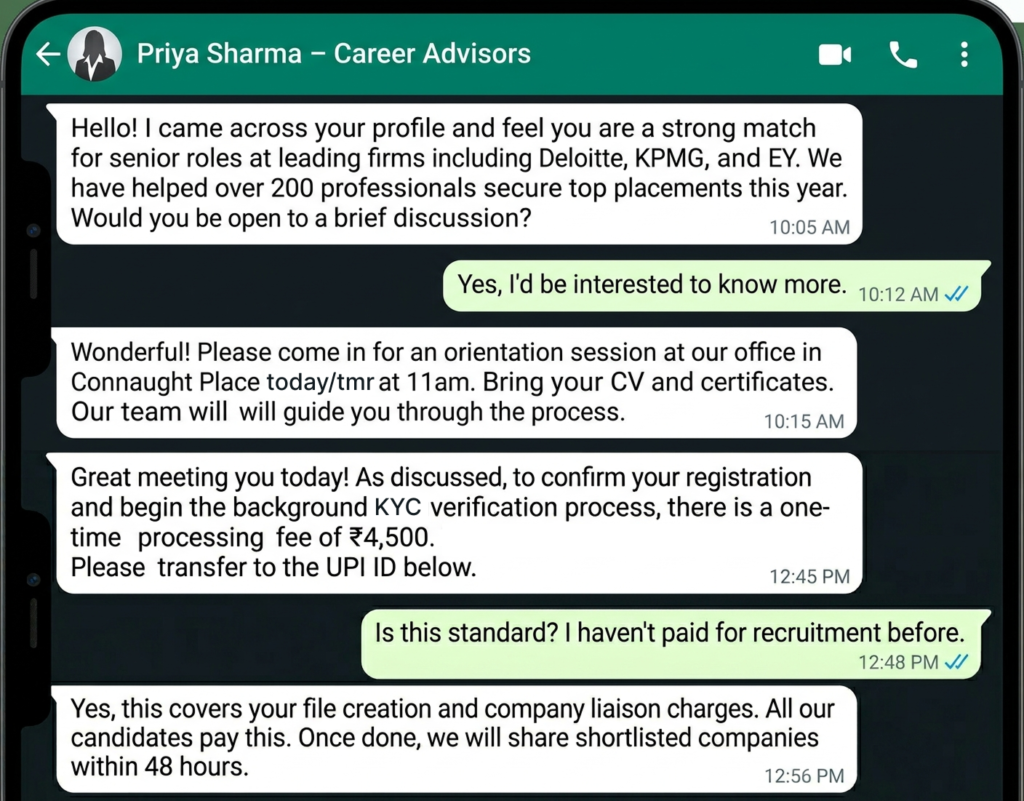
Someone contacts you claiming to be from a consultancy that can place you at a reputed company. They call you in for an interview. At the office, there may be guards at the entrance and a professional-looking setup. The consultant asks general questions about your qualifications and may even show you photographs of people they claim to have placed at major firms.
Then they ask for payment, usually framed as a registration fee, processing charge, or security deposit. In some cases, the setup is designed to make refusal feel difficult. Walk away from this immediately, as no legitimate placement firm charges candidates. Companies pay recruiters to find people, not the other way around.
How to tell if something is a scam
- No organisation or company ever asks for money to work for them. If a job offer includes a request to deposit a cheque and transfer part of it, that is a scam regardless of how legitimate the employer appears.
- Legitimate placement firms do not charge candidates. If a recruiter asks for an advance fee, you are almost certainly dealing with a scammer.
- If someone offers you a job that promises very high earnings for little work in a short time, treat it as a red flag. Check the company’s website, look for reviews, and verify official contact details independently. Avoid engaging with companies that have no online presence, no verifiable address, or inconsistent information across platforms.
- Never share your Aadhaar, PAN, bank account details, or other sensitive information with a company you have not verified. Ignore job offers sent through spam or unsolicited messages. If something feels off, it probably is.
You can report any cybercrime incidents to the National Cybercrime Helpline by dialling 1930. You can also visit the National Cybercrime Reporting Portal at cybercrime.gov.in to register your complaint online.