

Introduction
More than 86,000 cyber crimes were reported in just one year, according to the latest Crime in India Report released by the National Crime Records Bureau. Between 2018 and 2023, cyber crimes in India increased by a staggering 217%, highlighting the menace of cyber crimes in the post-Covid era.
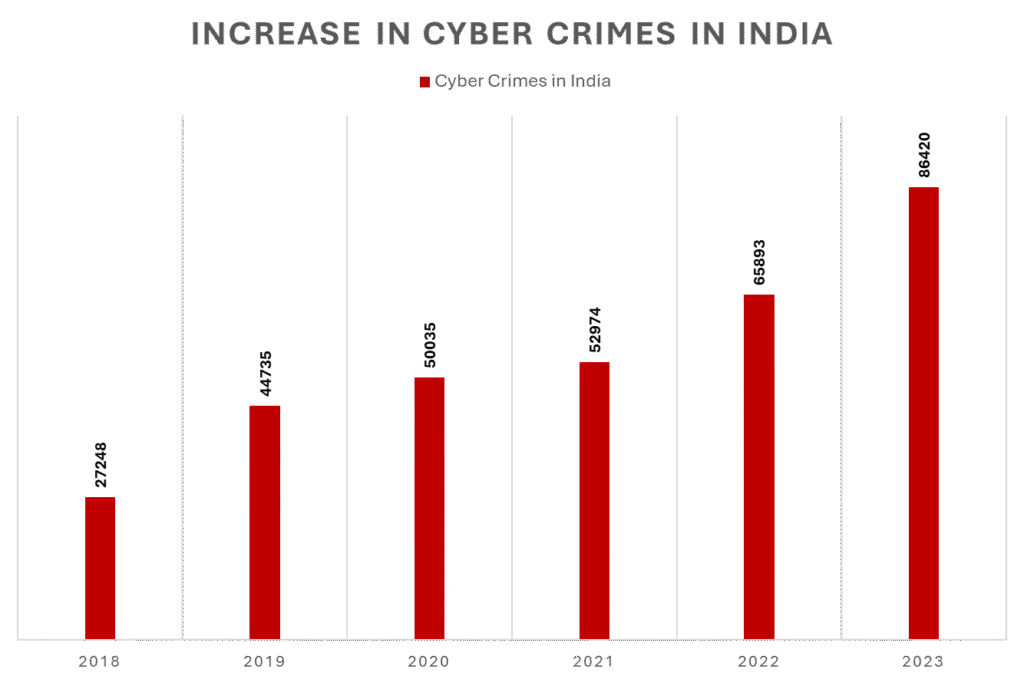
According to the NCRB Report most cases were reported from the state of Karnataka (21,889 cases). This was followed by Telangana (18,236 cases) and Uttar Pradesh (10,794 cases). Among metropolitan cities, most cases were reported from Bengaluru. Since 2018, most cyber crimes have been reported from the Silicon Valley of India, where the number of such crimes have increased by a massive 230% since 2018.
Important Trends
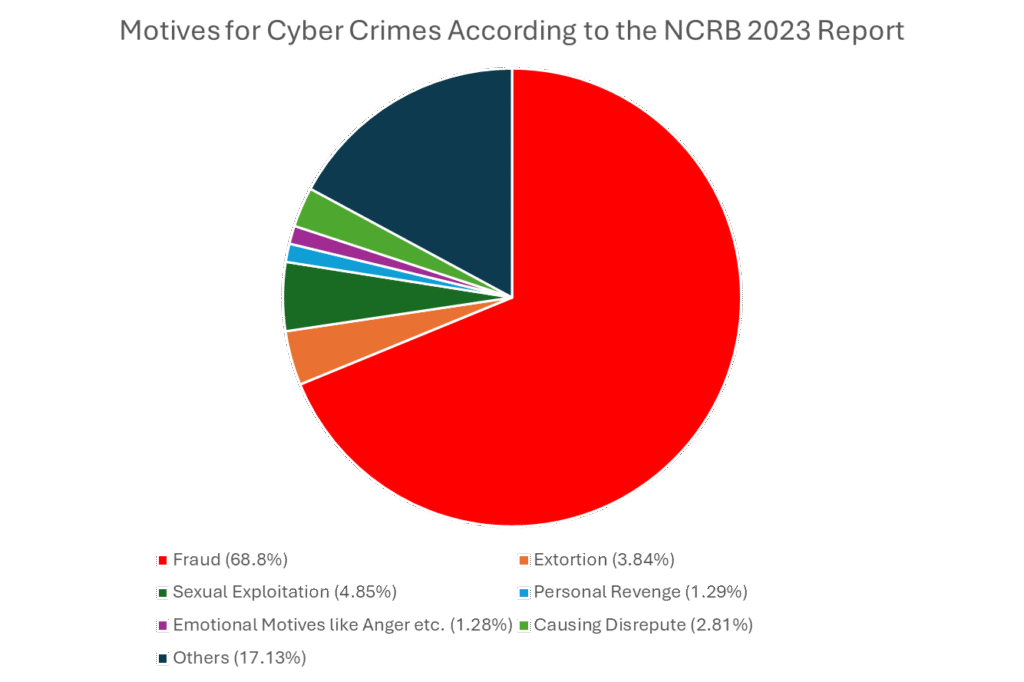
Nearly 68% of the cyber crimes were done with the motive to defraud people. Since 2018, most cyber crimes have been reported to have been carried out with the same motive.
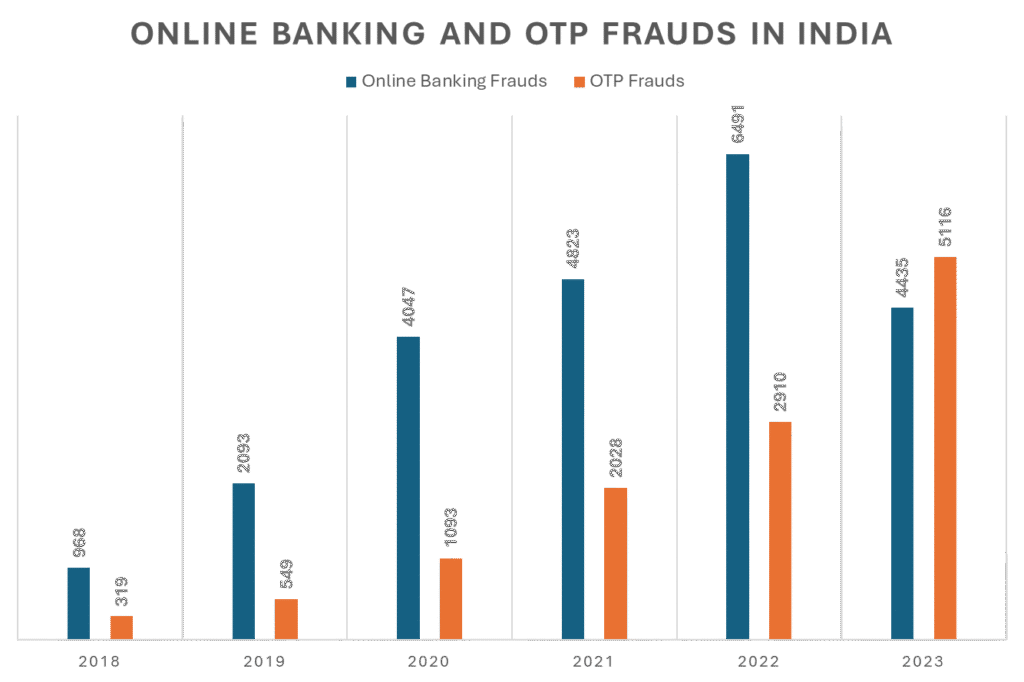
Additionally, banking frauds and One Time Password (OTP) frauds have also grown exponentially. The former has increased by 355% since 2018 and the latter, by a massive 1500%.
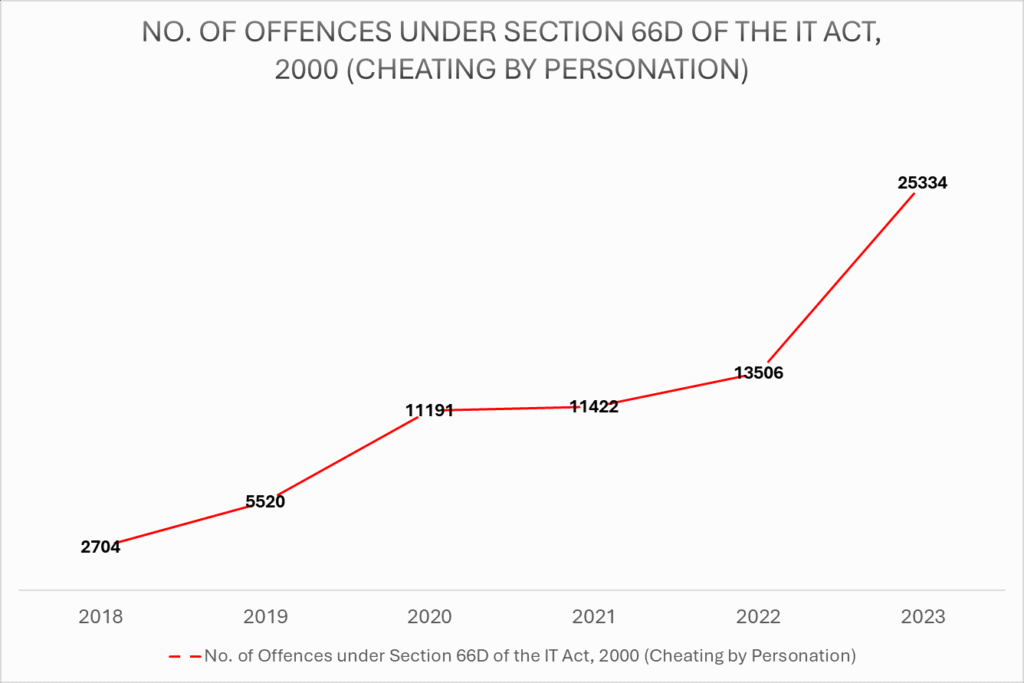
In cases of phishing, Section 66D of the Information Technology Act, 2001 which defines the offense of cheating by personation is invoked. Such offences have nearly doubled since 2022. It is a worrying trend that in the previous 5 years between 2018 to 2023 the number of such cases have increased nearly 10 times.
This year, 886 cases ended up in conviction (including cases which were pending since last year). 1929 cases ended up in acquittals and in 395 cases in discharge (cases where the charges are dropped).
Another concerning statistic is the unabated growth of cyber crimes against women. In 2018, 6030 such cases were reported and this number crossed 14,000 in 2022 itself. In 2023, more than 19,000 such cases were recorded. Children have also become a group being targeted by cyber criminals. In 2018, just over 230 cases were reported where children were victims of cyber crimes. In 2023, this number stood close to 2000.
The Road Ahead
The report provides a comprehensive overview of cybercrimes in the country. It is also important that the various sectors and industries (such as e-commerce and social media) are also covered in this report. Going ahead, the NCRB can also cover the new kinds of scams targeting citizens, such as the digital arrest scams, fake trading app scams, online job scams, APK files scam, etc.

Source: Radio City India (@radiocityindia) and Cyber Dost I4C (@cyberdosti4c) on Instagram
The Government has taken some important steps to deal with the issue of cyber crimes. Some of these include:
- Citizen Financial Cyber Fraud Reporting and Management System (CFCFRMS): It has been developed for quick reporting of financial cyber frauds and to prevent monetary losses suffered due to such scams. Through this, financial institutions have been able to save more than ₹5,489 crore in over 17.82 lakh complaints.
- Samanvaya Platform: The Samanvaya Platform enhances cyber fraud investigations by offering analytics-driven interstate linkages between criminals and crimes. Its ‘Pratibimb’ module visualizes the locations of criminals and crime infrastructure, providing officers with actionable insights.
- National Cyber Coordination Centre (NCCC): Set up by the Indian Computer Emergency Response Team (CERT-In), the NCCC analyses cyberspace to detect threats. It shares the information with concerned organizations, state governments and relevant agencies for taking action.
To curb the menace of cyber crimes, it is crucial that the citizens also become more vigilant and aware. For this purpose, Government agencies such as the Indian Cybercrime Coordination Centre(I4C)–which is the nodal point at the national level to deal with cyber crimes–has launched citizen-centric outreach campaigns which aim to spread awareness about the cyber threats and ensure that the digital citizens remain safe and secure.
Staying Safe Online
Here are some useful tips for staying secure when you are online:
- Use strong passwords: Mix letters, numbers, and symbols; avoid using the same one everywhere.
- Enable two-factor authentication: Adds extra protection to your accounts.
- Think before you click: Don’t open suspicious links or attachments.
- Never share OTPs/passwords or full card details: Banks, UPI apps or payment services will never ask for these over phone/messaging apps.

Source: Radio City India (@radiocityindia) and Cyber Dost I4C (@cyberdosti4c) on Instagram
Report any cybercrime incidents to the National Cybercrime Helpline by dialling 1930. You can also file a complaint online through the National Cybercrime Reporting Portal at cybercrime.gov.in.